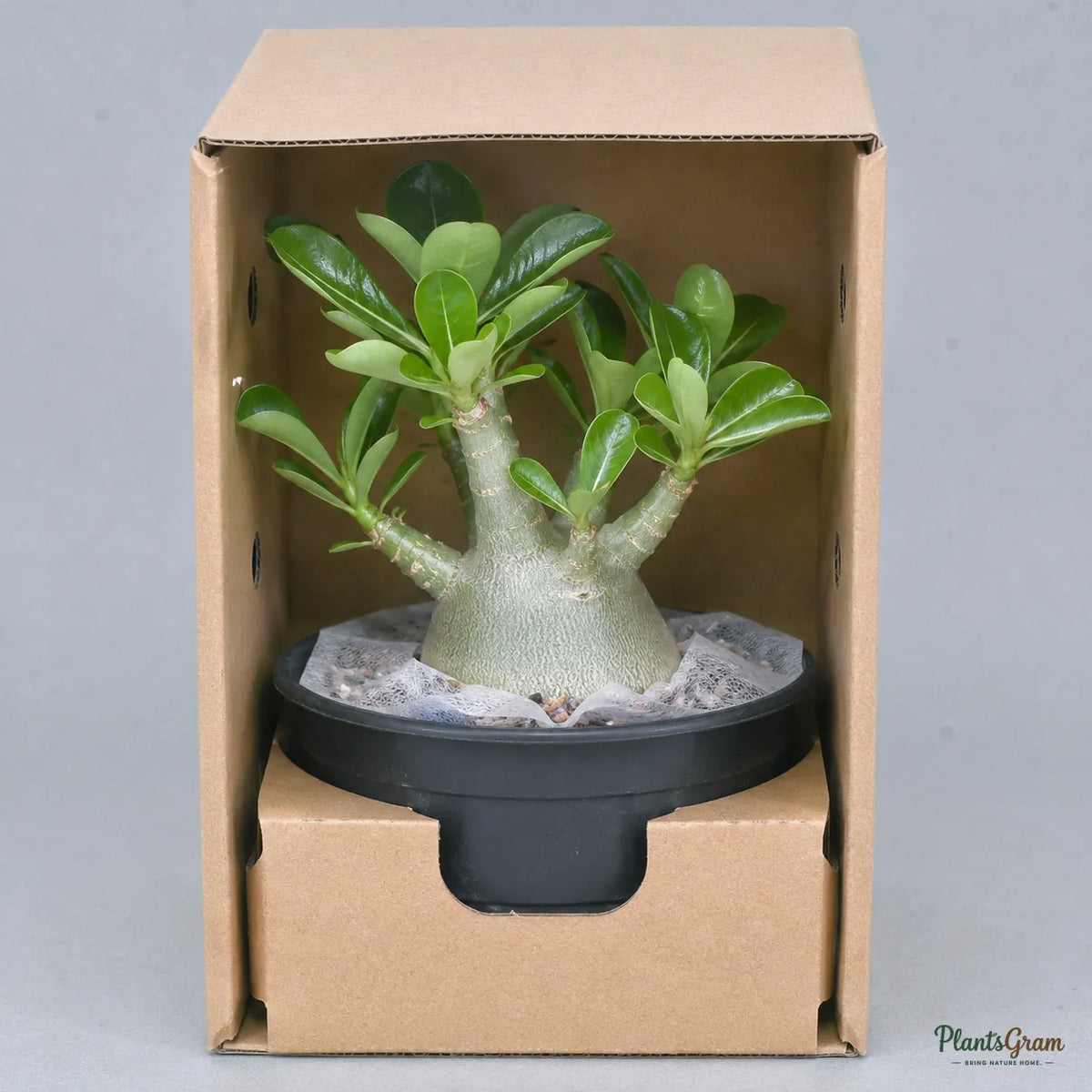
Adenium (Baby Pink) - Adenium obesum
Rs. 600.00
Rs. 1,220.00


Adenium (Baby Pink) - Adenium obesum
Adenium (Baby Pink) - Adenium obesum
In stock
Couldn't load pickup availability


About Adenium (Baby Pink)
Adenium (Adenium obesum, Apocynaceae family) - also called Desert Rose, Bangkok Kalanchuchi, or Japanese Frangipani - is an evergreen/drought-deciduous succulent shrub that blooms almost year-round. It's a popular low-maintenance houseplant, appreciated for colourful flowers and its unusual, thick stem with thick, shiny leaves. It is commonly grown for bonsai and can live more than 15 years.
Growing Conditions
- Sunlight: Minimum 4 hours of direct sunlight - full sun is best, or the plant becomes spindly with less vibrant blooms.
- Soil: A coarse potting mix of roughly 65% perlite, 5% rock, 5% sand, and 20% top soil with coir works well for aged/bonsai plants; well-drained, fertile soil is fine in the first year.
- Water: Overwatering can kill Adenium - water when the top 2-3 inches of soil feel dry, and always maintain moisture near the root zone without waterlogging.
Planting & Placement
Grows well in a small pot (minimum ~30 cm) - a flat bonsai-style planter works well for that style. Should not be planted directly in the ground; if needed, use raised mounds or raised beds. Can survive up to 15-20 days without water.
Care
- Fertilizer: Established Adenium needs little feeding; a phosphorus-rich fertilizer 2-3 times a year, especially during dormant periods, is enough.
- Pruning: Remove dead, infected, or damaged parts. Not generally prone to pests or disease - use neem oil spray for any infection.
Flowering
Blooms almost year-round given good bright light, in a soft baby-pink shade. Leaves shed and regrow multiple times a year, which is normal.
Note: This listing ships a young nursery plant. Growth and bloom timing vary by climate, care, and region - we don't promise a fixed timeline. Toxic if ingested (contains cardiac glycosides similar to Oleander) - sap can also irritate skin; keep away from pets and children.
Instructions
Instructions
- Watering: Water when top 2-3 inches of soil are dry - overwatering can kill the plant; can survive 15-20 days without water
- Light: Minimum 4 hours direct sunlight - full sun preferred
- Soil: Coarse, well-drained mix (roughly 65% perlite, 5% rock, 5% sand, 20% top soil with coir) for mature/bonsai plants; standard well-drained fertile soil is fine in year one
- Fertilizer: Minimal - phosphorus-rich fertilizer 2-3 times a year, especially during dormant periods
Delivery Info
Delivery Info
- Every plant is quality-checked before dispatch and packed with root-ball wrapping and moisture lock for transit.
- Delivery timelines depend on your pin code, courier network and weather conditions — tracking is shared as soon as your order is dispatched.
- Live plants are covered by our 10-Day Plant Protection against transit damage.
- Free shipping on orders above ₹999; Cash on Delivery is available.
- Some remote pin codes may not be serviceable for live plant delivery — this is shown at checkout before you pay.
FAQs
FAQs
How often should I water my Adenium?
Only when the top 2-3 inches of soil feel dry - overwatering is the most common way to kill this plant. It can survive 15-20 days without water.
Can Adenium be grown as a bonsai?
Yes, its thick, swollen stem makes it a popular and easy plant to start bonsai practice with, ideally in a flat planter.
Is Adenium safe around pets and children?
No - Adenium contains cardiac glycosides similar to Oleander and is toxic if ingested. The sap can also irritate skin. Keep it away from pets and small children.
Can I plant Adenium directly in the ground?
It's best kept in pots; if ground planting is needed, use raised mounds or raised beds for proper drainage.